Early Juneteenth Celebration Sprouted at Emancipation Park
In 1872, two pastors, a blacksmith, and a carpenter-turned-politician purchased 10 acres of land with the sole purpose of celebrating Juneteenth.
This represented an alliance between members of two congregations, the Trinity Methodist Episcopal Church (presently known as the Trinity United Methodist Episcopal Church) and the Antioch Baptist Church (known today as Antioch Missionary Baptist Church) who came together as the Colored People of Harris County Festival Association in Houston, Texas.
Reverend Jack Yates, Reverend Elias Dibble, Richard Allen, and Richard Brock spearheaded the effort. They led a group of trustees to raise $800 (which would be about $20,000 today). That might not seem like much money, but most of them had only been released from slavery for seven years.
The Founding Fathers
John Henry “Jack” Yates was born July 11, 1828 on a farm in Gloucester County, Virginia, and spent the first decades of his life as a slave. His love for learning was kindled as a young boy even though educating slaves was illegal. When his master’s son came home from school, he would share what he learned with Jack while they played together outside.
When he grew up, Yates married Harriet Willis. She was enslaved on another farm in the area, but somehow, they had eleven children. Yates eventually his freedom, but his wife and children remained in bondage. When Yates learned Willis’ master was moving to Texas in 1863, he allowed himself to be re-enslaved so he could keep their family together. Fortunately, they were all free two years later.
Soon afterwards, Rev. Yates became Antioch’s first full-time pastor. Under his pastoral leadership their church became Houston’s first brick building constructed and owned by Black people. His passion for education led him to help establish two schools. Bishop College, the state’s first college for African-Americans was founded in 1881. Houston Baptist Academy was established four years later eventually leading to the formation of Texas Southern University.
Reverend David Elias Dibble was born into slavery in 1811 in Darien, Georgia. In his mid-twenties he came to live in Houston, where he led a small congregation of fellow slaves which would later become known as the Trinity Episcopal Methodist Church after they were freed. On June 19, 1866, he and along with the Reverend Sandy Parker (who was one of the pastors of Antioch at the time) were at the forefront of the earliest recorded celebration of the anniversary of Juneteenth. Between 3,000 and 4,000 people flocked to the city to celebrate.
Dibble also took a keen interest in expanding education. His church operated a school for several years until the establishment of the Gregory Institute in 1870. He would go on to serve as a trustee on the school’s Board of Comissionners. Members of his congregation were also instrumental in the founding of both Texas Southern University and Wiley College.
Richard Allen, also originally from Virginia, was born June 10, 1830. Allen was transported to Harris County, Texas while still a boy, when his master decided to move there. After gaining his freedom he married and had five children. An excellent carpenter, one of his noteworthy projects was designing and building the mayor’s mansion. Allen entered public service in 1867 as a federal voter registrar. He was appointed to Twelfth Legislation in 1869. Allen was the first black Texan to run for a state-wide position when he was nominated by the Republican party to be lieutenant governor.
Richard Brock was born in 1824. Originally from Kentucky, he came to Houston in 1847. While he wasn’t a pastor, he was one of St. Paul A.M.E. Church’s founding members in 1869. In addition to his work as a blacksmith, he was politically active and made history as one of the city’s first black aldermen in 1870. Brock also worked with Dibble and others to develop Olivewood Cemetery, which is one of the city’s oldest cemeteries for African-Americans.
Other individuals listed as being instrumental in the purchase of this land and are listed on the deed are Frank Keeland; John Seesums, another carpenter who helped establish the Trinity M.E. Church and served as its lay pastor; Johnson Rice; Taylor Burke Daniel Riley, who helped co-found the Antioch Baptist Church; John Graham, another blacksmith, and Tillman Bush, a grocer.
Was Emancipation Park necessary?
Why would people, especially church folks, spend so much time, energy, and money to create a space to celebrate one day out of the year? It may, at first glance, seem a questionable purchase. A closer look reveals that this was part of a wholistic approach to living out their freedom. These men were also building houses, churches, and other crucial aspects of a newly blossoming Black community, and this park was part of the plan.
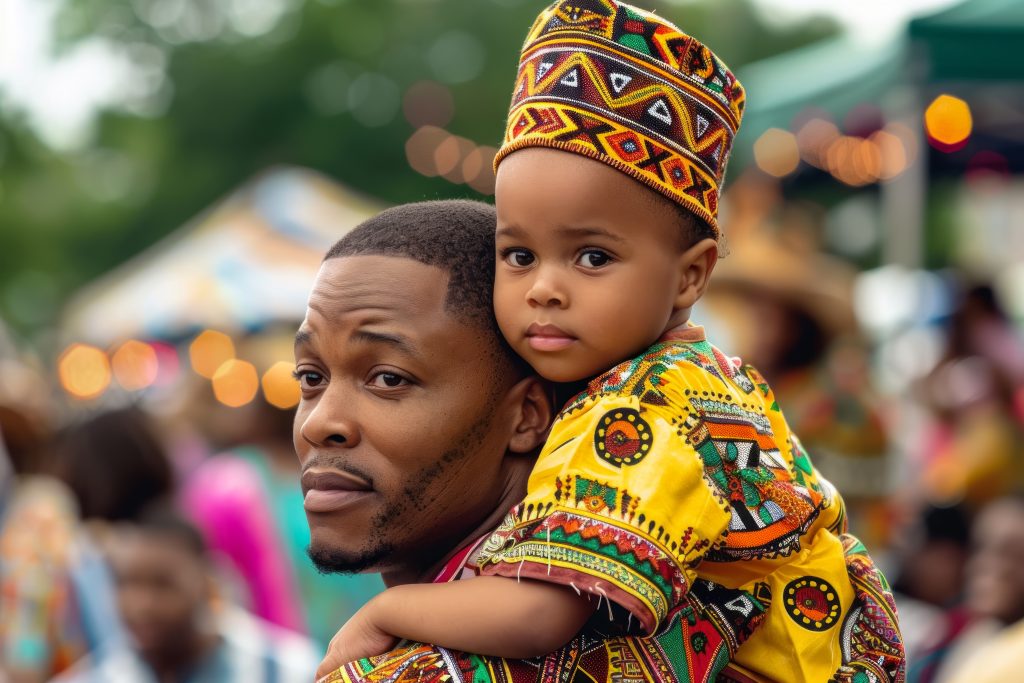
Emancipation Park was a haven for black joy and celebration. During this era and the years to follow, it was often difficult for black people to be able to celebrate because of the rampant racism that prohibited them congregating in public. These 10 acres were the sole park in the area for decades that black people were allowed to enjoy.
The role of the church leaders in this holiday is something that is crucial to note—it is no small coincidence. While it may seem to be secular celebration, its spiritual undergirding cannot be ignored.
Rice University historian Caleb McDaniel whose research uncovered possibly the first ever Juneteenth sheds this insight, “In many ways, the first Juneteenth celebrations in Houston commemorated freedom not only from slavery but also from proslavery churches.”[1] Prior to this point McDaniel notes that Black people had in many cases been part of mixed congregations that practiced segregation and discrimination.
Emancipation Park’s “Founding Fathers” recognized that in order to fully experience the freedom that comes from Christ, this had to extend to all avenues of their lives. This is why each of them were so active in their community outside of church. People cannot only afford to look forward to a future spiritual freedom: there is a need to work toward a better world here where people can be true to their authentic selves. This was preached by pastors such as Martin Luther King, Jr. and James Cone.
The Value of Celebration
Celebration is powerful for healing the soul on a personal level and is amplified when people to come together. It can also be an act of protest and defiance. This is iterated by Kleaver Cruz, the founder of the Black Joy Project.
“Black Joy is not … dismissing or creating an ‘alternate’ black narrative that ignores the realities of our collective pain; rather, it is about holding the pain and injustice…in tension with the joy we experience. It’s about using that joy as an entry into understanding the oppressive forces we navigate through as a means to imagine and create a world free of them.”[2]
In the words of African American studies professor Mei-Ling Malone of California State University, Fullerton:
“Black joy is an act of resistance. The whole idea of oppression is to keep people down. So when people continue to shine and live fully, it is resistance in the context of our white supremacist world.”[3]
This is a fitting description of what took place at the first Juneteenth, which was celebrated on the heels of a pro-Confederacy parade just days before.
Celebration is a core aspect of human expression—of joy. Celebrating in of itself was a continuation of the advancement towards equality and civil rights even though there was still much work to be done.
It was a symbolic act to ensure that there was a permanent location where celebration was welcomed. Land ownership is a source of empowerment and resistance, and generational wealth. This was significant in a society that had once reduced people of color to property and associated citizenship with land ownership.
Development of the Park over the Decades: A Lasting Legacy
In 1916, the property was donated to the city. Many amenities have been added since then: a pool, recreation center, a baseball field, tennis courts, a theater, a cultural center, and more. The present-day Emancipation Park, now a protected landmark, continues to be a gathering place for the members of the community. It testifies to how longstanding the celebration of Juneteenth has been to the community long prior to its recognition as a national holiday. This Juneteenth in Houston is full of activities at Emancipation Park, including a dominos tournament, thanks to church members who recognized the need to be involved in their communities.
[1] https://news.rice.edu/news/2026/houston-was-first-rice-historian-uncovers-origins-juneteenth-celebrations
[2] https://nmaahc.si.edu/explore/stories/black-joy-resistance-resilience-and-reclamation
[3] https://voiceofoc.org/2021/02/celebrating-black-joy-as-an-alternative-form-of-resistance-and-reclaiming-of-humanity/
 Freedom, food, family, and fun!
 They say, you can manage what you cannot measure. If that is so, then we should first begin with a measurement.
