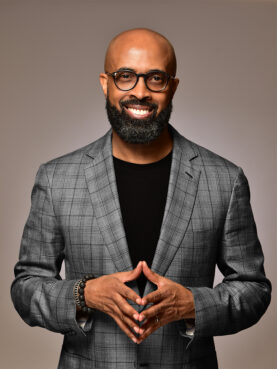
Richard Smallwood, ‘Total Praise’ Composer, Receives Juneteeth Tribute in D.C.

For decades, Richard Smallwood has been on stages from Carnegie Hall to churches, at the piano or at the microphone, performing music that features his distinctive genre-bending blend of gospel and classical.

Now, as a way to mark both his 75th birthday and Juneteenth, Smallwood is getting the Kennedy Center treatment: The Grammy nominee and Stellar and Dove awardee will get a special seat in the premiere concert hall in the nation’s capital as other gospel luminaries such as Dorinda Clark-Cole and Marvin Winans join choir members to perform in his honor.

Smallwood, who celebrated his birthday in November, launched the Richard Smallwood Singers in 1977 and then, in the 1990s, created and began touring with the ensemble Vision, which will be part of the performances on Tuesday (June 18) and Wednesday, the Juneteenth holiday that marks the effective end of slavery in America.

Smallwood is known for such hits as “I Love the Lord,” which was later recorded by Whitney Houston, and “The Center of My Joy,” which he co-wrote with Bill and Gloria Gaither.

Though Smallwood describes himself as “semiretired” and said he’s now more of a baritone than a tenor — “The notes I can hit at 28 and 27, I can’t hit anymore” — he is as devoted to supporting all kinds of music as he was decades ago when he said, “I have no problem with crossover music, as long as you carry the cross over with you.”

In an interview days before the Kennedy Center events, he said: “I think any music that preaches Jesus and him crucified is a kind of music that is appropriate in the church setting.”

Smallwood, who was raised by a stepfather who was a Baptist pastor, talked with Religion News service about his enduring music, post-COVID choir music and influences on his songwriting.


The interview was edited for length and clarity.

For decades, Richard Smallwood has been on stages from Carnegie Hall to churches, at the piano or at the microphone, performing music that features his distinctive genre-bending blend of gospel and classical.

Now, as a way to mark both his 75th birthday and Juneteenth, Smallwood is getting the Kennedy Center treatment: The Grammy nominee and Stellar and Dove awardee will get a special seat in the premiere concert hall in the nation’s capital as other gospel luminaries such as Dorinda Clark-Cole and Marvin Winans join choir members to perform in his honor.

Smallwood, who celebrated his birthday in November, launched the Richard Smallwood Singers in 1977 and then, in the 1990s, created and began touring with the ensemble Vision, which will be part of the performances on Tuesday (June 18) and Wednesday, the Juneteenth holiday that marks the effective end of slavery in America.

Smallwood is known for such hits as “I Love the Lord,” which was later recorded by Whitney Houston, and “The Center of My Joy,” which he co-wrote with Bill and Gloria Gaither.

Though Smallwood describes himself as “semiretired” and said he’s now more of a baritone than a tenor — “The notes I can hit at 28 and 27, I can’t hit anymore” — he is as devoted to supporting all kinds of music as he was decades ago when he said, “I have no problem with crossover music, as long as you carry the cross over with you.”

In an interview days before the Kennedy Center events, he said: “I think any music that preaches Jesus and him crucified is a kind of music that is appropriate in the church setting.”

Smallwood, who was raised by a stepfather who was a Baptist pastor, talked with Religion News service about his enduring music, post-COVID choir music and influences on his songwriting.


RELATED: In ‘Gospel’ docuseries, Henry Louis Gates Jr. explores Black church’s music, ministers


The interview was edited for length and clarity.

Richard Smallwood. (Courtesy photo)

Richard Smallwood. (Courtesy photo)

What does it mean to you to be able to mark this milestone in your life with a celebration of Juneteenth at the Kennedy Center?

First of all, the date of the celebration means a lot to me personally. I was thinking earlier that when I was a little boy my mother used to take me to hear the National Symphony Orchestra. Never would I think one day, they’d be playing my music. That’s amazing. And I’m so grateful.

Does Juneteenth have a personal meaning for you?

Yes, it is, because it’s for our culture. It’s a huge landmark, which signifies freedom, and so to be a part of that is a great honor and such a great opportunity.

Your music has been sung at funerals of victims of police and school shootings, accompanied liturgical dancers at church services and greeted the pope at the White House. Have you been surprised by the range of your work?

I’m always surprised. When you write a particular piece, you have no idea what’s going to become of it — will people like it, or will people sing it. And so to see the years of people embracing it really means a lot to me as a composer. It means a lot that something I wrote can make a difference in people’s lives.

At Metropolitan Baptist Church, a D.C.-area church where you have been a music minister, you’ve done a version of Handel’s “Messiah” called “Handel’s Messiah: A Soulful Celebration,” which included your arrangement of “Rejoice Greatly, O Daughter of Zion.” 

I love the “Messiah.” I’m in love with classical music. I was trained classically at Howard University. So I have a love of gospel. I have a love of classical. I love all genres, so it’s always been an honor, and such great excitement to be a part of it.

You were diagnosed with clinical depression a number of years ago. What difference has it made in your ability to write music and the kind of music you have written?

First of all, music is something that reaches all kinds of situations and issues. People say it soothes the savage breast or the savage beast — however you want to say it —and it does. With depression, music is something that helps me with that. And it makes a difference. Music just tends to turn off the craziness, if you will, and brings a light of love and a feeling of peace. Most of my music that I’ve done has come from personal situations from my life, things I’ve gone through, things that I’ve written about, things that I’m feeling, things that I’ve tried to convey to other people who may be hurting. Music has the tendency to heal hurt, and it certainly has healed mine in a lot of ways.

How has music, including gospel music in Black churches, changed as congregations and choirs regrouped after the COVID-19 pandemic?

Most of our churches were closed unless they were via Zoom. And so it’s refreshing to start getting these back. Music is so much a part of who we as a culture are, starting with the Negro spirituals until now. It’s music that has brought us over through slavery, through all kinds of hard trials and tribulations.

Have the choirs come back, in your sense, or are they smaller?

I think it depends upon the size of the church. Smaller churches are still recuperating because some people have gotten used to having their pajamas on and listening to service as opposed to getting up and going out to the actual service. But I think it’s starting to pick up and especially larger churches are back doing what they’ve always done.

Some of your songs have been sung in Jewish settings. Have you had the chance to witness that yourself?

I have. I used to do a thing at Carnegie Hall in New York City and several of those performances, we had a cantor come and sing “Total Praise.” It was absolutely amazing. It shows how connected we all are and so it was just a blessing to hear that.

Who has been your greatest musical influence?

Oh, wow. There’s so many. My favorite classical composer on the planet is Johann Sebastian Bach. Anything Baroque I love. My favorite gospel composers are people like Edwin Hawkins; he wrote “Oh Happy Day,” the gospel version. Or Walter Hawkins. I grew up on the Roberta Martin Singers, a group out of the ‘40s or ‘50s.

That answer fits the way people describe you, as having blended classical and gospel.

My mother started buying me gospel albums — I’m dating myself, albums — when I was no more than 6 years old, and while we were living in Philly, she would take me to the Philadelphia Orchestra featuring Eugene Ormandy. And so I was getting all of these genres in my ear and in my head and in my being. When I started to write professionally, I just think a combination of the things that I love began to take root in terms of what I was trying to convey in terms of the style. And when I turned around it was a hybrid, I guess, of both of them.


Churches Look to Eclipse as Outreach Opportunity

‘Science is part of God’s wonder,’ said one pastor. ‘And I think it’s good for us to celebrate that as Christians.’

(RNS) — The special glasses have been delivered. The portable toilets have been ordered.

Now, for expectant sky watchers and for property owners — including a number of churches — in the path of the total solar eclipse Monday (April 8), it’s just a matter of waiting and hoping for good weather until the eclipse begins.

Across the swath of the United States stretching from Texas to Maine where “totality” is expected, clergy have come up with ways to make the most of the astronomical show — handing out those glasses, giving out-of-towners a place to park and observe the event, and even offering locals the opportunity to be baptized near the time of near-total darkness.

Billy Glover, pastor of Steel City Church in Sheffield Lake, Ohio, said he has five “school aged students” who intend to be baptized that day as the moon briefly blots out the sun.

“The purpose of holding baptisms during the eclipse is to offer a once in a lifetime opportunity for new believers, to be raised from darkness into a new life through Jesus Christ,” the Southern Baptist pastor told Religion News Service in an email.


The path of totality and partial contours crossing the U.S. for the 2024 total solar eclipse occurring on April 8, 2024. (Courtesy of NASA’s Scientific Visualization Studio)

The path of totality and partial contours crossing the U.S. for the 2024 total solar eclipse occurring on April 8, 2024. (Courtesy of NASA’s Scientific Visualization Studio)

Glover’s church will provide paid spaces in its parking lot, “which will include two pairs of certified eclipse viewing glasses.” In addition, there will be access to bathrooms and concessions.

Deborah Haarsma, president of BioLogos, an organization that seeks to foster the integration of science with Christian faith, said she views the eclipse as a new way for churches to connect with a wider community.

“This is a moment where we can be worshipping the Creator,” she said, “and doing that together, doing that at church, I think, is a wonderful thing for the church community itself and also great outreach to the larger community where they see that a church is engaging things in the natural world, things that everybody’s curious about.”


Deborah Haarsma, right, observes the 2017 solar eclipse alongside her brother. (Courtesy photo)

Though they are aware of the time and the date of the eclipse, clergy realize there are a lot of unknowns for an event that NASA says will occur over more densely populated regions than the path observed in 2017.

The effect of unusual levels of traffic is one worry. “The impact on our roadways from the projected number of visiting spectators is a significant safety concern before, during and after the eclipse,” Glover said. “Then, if that is not enough, we have been notified from emergency services that part of our property will be used to station the medical helicopter for medevac purposes.”

Lifeway Baptist Church in Ellettsville, Indiana, plans to make three portable toilets and its two parking lots available for free — first come, first serve — on Monday.

Doug Stewart, pastor for member growth at the independent Baptist church northwest of Bloomington, says many of those who will descend on the Bloomington area — some 300,000 people, officials predict — may head to the University of Indiana’s “Hoosier Cosmic Celebration,” where “Star Trek” actor William Shatner, former astronaut Mae Jemison and “Hidden Figures” actress Janelle Monáe are scheduled to appear.

The Rev. Kim James, pastor of Ogden First United Methodist Church in Marriott-Slaterville, Utah, ordered eclipse glasses in January and distributed about 175 of them on Easter Sunday.

On one arm of the reflective glasses is the name of the church, its website address and “Eclipse – April 8, 2024,” and on the other, the words “Happy Easter!” and the verse from the Gospel of John that reads: “The light shines in the darkness, and the darkness did not overcome it.”

“I think it’s cool to celebrate God’s creation, and all that God has created, and this is a part of that,” James said. “Science is not something to be denied. Science is part of God’s wonder. And I think it’s good for us to celebrate that as Christians.”

The Rev. Kim James demonstrates using solar eclipse glasses during an Easter Sunday service at Ogden First United Methodist Church in Marriott-Slaterville, Utah. (Video screen grab)

Between announcements about the Easter egg hunt that was moved indoors due to rain and the plans for telling jokes for the following Sunday’s emphasis on “holy humor,” James held up the glasses and showed how to wear them safely.

As she concluded her sermon, she noted that the next view of a total eclipse in North America will not occur for 20 years. Utahns will see about 47% of the one on Monday if clouds do not obscure the event for them.

“Since there won’t be another total eclipse in North America until 2044, I thought we should make the most of this one,” she said. “As the moon rolls over the sun and darkens the earth and then rolls off the sun, you can use these eclipse glasses to look skyward and think about how light came on that Easter day when the stone was rolled away from the tomb.”

Haarsma, of BioLogos, said the solar-lunar experience provides not only an opportunity for churches to reach out to their communities but for often-polarized community members to connect with each other.

“The sun and the moon are unaware of the challenges in our culture, but they’re putting on this amazing show for us and God’s creation is setting up in a way that we get to see this glorious event,” she said. “And that makes it a great time for us to come together across all stripes and communities and flavors of America. We can all enjoy this event and I hope people do.”


Ministers Aid Seafarers Caught in Baltimore Bridge Crisis

Everyone’s still kind of rattled and trying to figure things out,’ said the Rev. Joshua Messick, who has Bibles ‘in every conceivable language’ to distribute upon request.

Day in and day out, ministers to seafarers spend their times on the docks of Baltimore, delivering Bibles, magazines and a friendly face during a ship’s usually brief time in the busy port.

But, with the collapse Tuesday (March 26) of the Francis Scott Key Bridge, the mission of two ministries has shifted to longer-term aid for the crews of the Dali ship that struck the bridge and seven other large vessels stuck in the port for the foreseeable future.

The leader of one of the ministries, Joshua Messick, said he will be advocating for the rights of those crew members, including that they have adequate provisions and that their shore leave is not restricted.

“My primary focus will be on caring for those seafarers who cannot continue their journeys,” said Messick, an Episcopal priest and executive director of Baltimore International Seafarers’ Center. “Just making sure they have everything that they are supposed to have and everything that they need to make their extended stay here as pleasant as possible.”

Andy Middleton, a lay Catholic ecumenical minister who directs the other ministry, the Archdiocese of Baltimore’s Apostleship of the Sea, has been communicating via WhatsApp with a couple of the crew members on the Dali, who remained on the ship, which is still entangled with bridge debris.

“I’ve been reaching out to them periodically since (Tuesday) morning, just to check in and make sure everybody’s still doing OK, reminding them that we’re here for them and that we’re praying for them,” he said, “and making sure that they know that when they eventually get clear of the incident and come back to a berth that we’ll still be here, waiting for them and wanting to help them.”

Their work with the crews comes as federal, state and local officials grapple with a complicated set of problems, including clearing bridge debris, getting ships back into the port and rejiggering a sprawling supply chain that ranges from cruises to coal to cars — and, eventually, rebuilding the bridge that spanned the Patapsco River.

Maryland Gov. Wes Moore spoke at a Wednesday news conference, where it was later announced that the bodies of two of the six people who had been missing were found. He acknowledged the words of kindness and the prayers from around the world.

“To everybody who is sending out those prayers I want to say that we have felt them and we’ve been comforted by them,” he said. “We’re also going to need your support. The collapse of the Key Bridge is not just a Maryland crisis. The collapse of the Key Bridge is a global crisis. The national economy and the world’s economy depends on the Port of Baltimore.”

As the officials work to help the wider population affected by the crisis, Messick and Middleton say their teams continue to focus on the particular needs of those who are at its ground zero. For example, providing familiar food to the stranded Indian crew.

“One of my first thoughts is once the crew gets back into a berth, maybe having a dinner of Indian food cooked and then delivering it to the vessel,” said Middleton, who works with six volunteers. “The cook doesn’t have to cook a meal for the entire vessel. He can take a break and everybody can sit down and eat together.”

Messick’s center, which includes a Lutheran and a Baptist chaplain and volunteers, is affiliated with the global Mission to Seafarers.

The Rev. Joshua Messick, right, executive director of the Baltimore International Seafarers’ Center in Maryland, takes a selfie with a seafarer and his family. (Photo courtesy Joshua Messick)

Although their work is not always focused on faith, he said his team had administered ashes on Ash Wednesday and taken palms to seafarers since Palm Sunday. Their usual plans to take Easter candy to ships will be truncated to the eight now remaining in the harbor. They also try to meet the needs of seafarers when they “express a religious desire outside of our lane” by providing resources or getting a clergyperson of their faith to visit them onboard their ships.

Messick hopes to work to fulfill requests for Holy Week and Easter, but on Wednesday it was too soon to receive them, he said.

“Everyone’s still kind of rattled and trying to figure things out,” said Messick, who also has Bibles “in every conceivable language” to distribute upon request.

“Once the second shoe drops and people realize they’re going to be here for a while, then we’ll get more of those requests.”

The Baltimore ministries are two of 55 maritime ministry agencies affiliated with the North American Maritime Ministry Association, which has about 100 member chaplains, according to its website. Both are tied to larger organizations that have served men and women who work at sea for more than a century.


In this undated photo, a crew of seafarers aboard their ship docked at the Port of Baltimore in Maryland. The Francis Scott Key Bridge is visible in the top left of the photo. (Photo by Maggie Schorr)

The people aided by these ministries live a rough life, under monthslong contracts, made even tougher by the circumstances for those in Baltimore now.

“It’s not a 9-to-5 job,” said Middleton, who read from the Book of Isaiah at a Mass on Tuesday remembering the victims who had been on the bridge. “It’s not like the military, where you can take leave to go home for a wedding or a birth or a death in the family. When you sign on, you’re there for the duration of your contract, barring a health emergency or something that would make you unfit for duty.”

Messick, whose team has climbed gangways to visit the stuck seafarers, said the crew members now in Baltimore are in a new phase of uncertainty, especially since those who do not have a U.S. visa and a shore pass cannot depart from their ships.

“The seafarers are used to working through the unknown kind of situations ‘cause they’re at the mercy of the tide and the weather,” he said. “They’re used to delays also if a ship is at the berth that they need to get into. They have to wait until they can get in. What they’re not used to is being in one place for this long.”

Wendy Cadge, a Brandeis University professor of sociology who is an expert on chaplains, said these kinds of ministers play a crucial role, especially for seafarers who may never touch land.

“They humanize the work for the seafarers,” said Cadge, co-author of the forthcoming book “Chaplaincy and Seafarers: Faith at Work.” “Customs looks at the goods and the Coast Guard looks at the vessel, but no one necessarily cares to or attends to the seafarer.”

U.S. Transportation Secretary Pete Buttigieg told reporters at a White House briefing on Wednesday that it was “too soon to venture an estimate” for when the port would reopen.

Messick said he has assisted seafarers in the past when, on occasion, a ship has been abandoned in the port, but nothing compares to this “once in a lifetime” crisis.

“Thankfully, that doesn’t happen too often, but we’ve had ships that were abandoned in Baltimore for a year,” he said. “That’s care of one crew. This is going to be care of eight for a considerable period of time.”


Charlie Dates counters John MacArthur’s declaration that MLK ‘was not a Christian’

In an open letter, the Chicago pastor compares the California pastor to King opponents George Wallace and J. Edgar Hoover, calling MacArthur ‘them in postmodern dress.’

(RNS) — The Rev. Charlie Dates, the pastor of two historically Black churches in Chicago, is defending the Rev. Martin Luther King Jr. after California pastor John MacArthur declared in February that the civil rights leader “was not a Christian at all.”

“We, the undersigned, regret that we have to write you this way, but we sense that this is the only way to address the egregious wrong that you — and those like you — have yet again inflicted on Black Christians in America,” Dates wrote in an open letter that appears on the website of his Progressive Baptist Church in Chicago.

“Undoubtedly, you, Mr. MacArthur, have made significant and helpful contributions to the reading and understanding of scripture for our present age. How ironic it now feels to write to you, a teacher, a word of correction. We hope that you will find within this missive a patient and reasonable rebuttal for your unwise and ill-timed slander of the Rev. Dr. Martin L. King, Jr.”

The controversy reflects the lines that have been drawn in disputes among Reformed Christians and other Christian groups over issues related to race or social justice.

MacArthur’s comments were made during a question-and-answer session at Grace Community Church in Sun Valley, California, where he is the longtime pastor. He was asked what he thought of two influential evangelical groups, Together for the Gospel and The Gospel Coalition, which have been popular with Reformed Christians like those in MacArthur’s congregation.

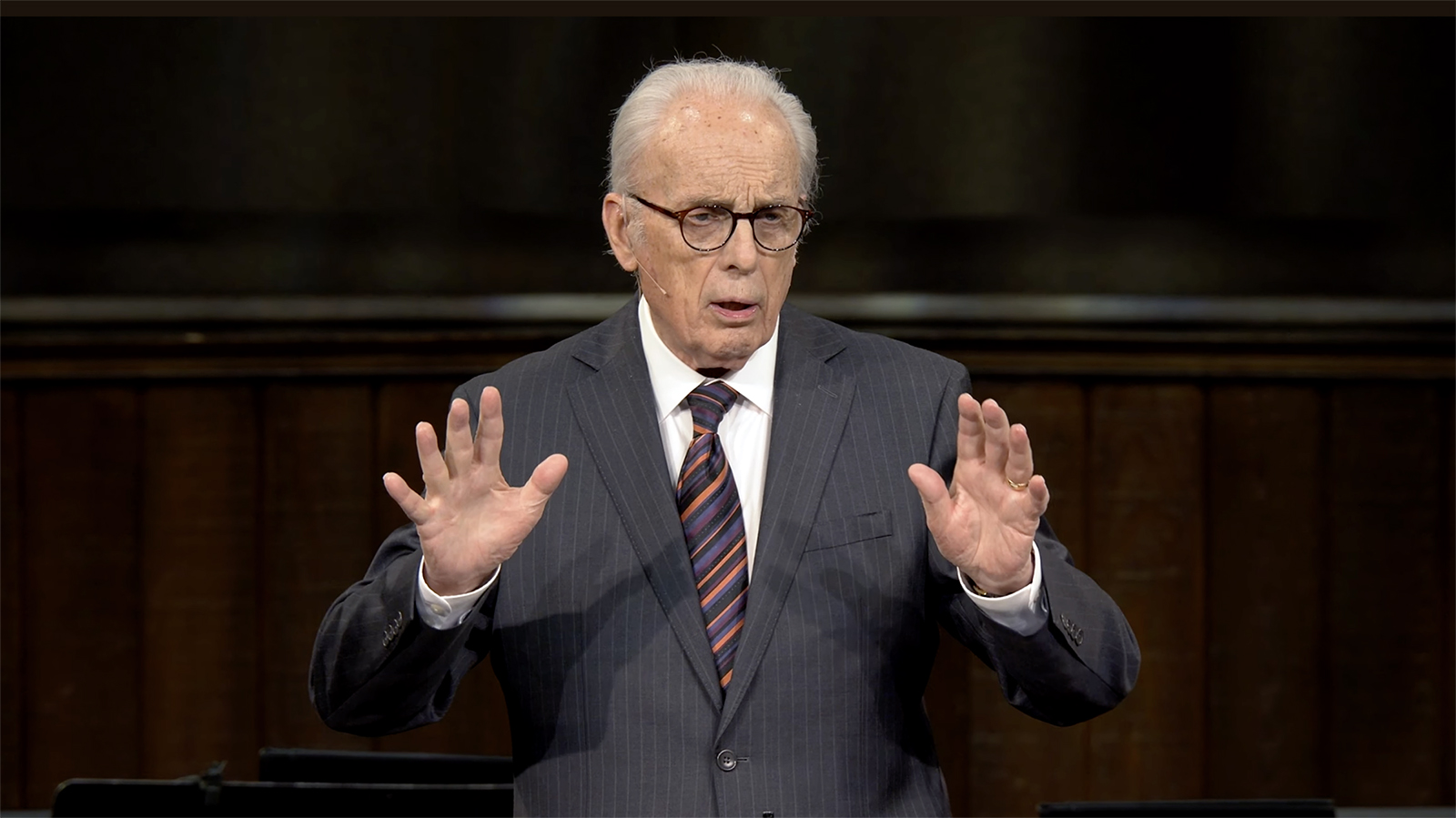
Pastor John MacArthur speaks at Grace Community Church, Sunday, Feb. 18, 2024,, in Sun Valley, California. (Video screen grab via Youtube/Grace Community Church)

Pastor John MacArthur speaks at Grace Community Church, Sunday, Feb. 18, 2024, in Sun Valley, California. (Video screen grab via Youtube/Grace Community Church)

After noting that Together for the Gospel had held a tribute to Reformed theologian R.C. Sproul shortly after his death in 2017, MacArthur added, “And the strange irony was a year later they did the same thing for Martin Luther King, who was not a Christian at all, whose life was immoral,” he said in a video posted on X, formerly Twitter, in February. “I’m not saying he didn’t do some social good. And I’ve always been glad that he was a pacifist, or he could have started a real revolution.”


RELATED‘We out’: Charlie Dates on why his church is leaving the SBC over rejection of critical race theory


The Gospel Coalition, he said, was once a good organization but is now “useless” and “woke,” said MacArthur. “It’s Christianity astray,” he said — referring to a satirical nickname for Christianity Today, an evangelical magazine MacArthur has disapproved of in the past.

A spokesman for The Gospel Coalition did not respond to a request for comment.

MacArthur has been at odds with The Gospel Coalition since 2018, when that group helped sponsor a major conference in Memphis, Tennessee, commemorating the 50th anniversary of the death of Martin Luther King Jr. and condemning racism and its negative effects on the life of the church. At the event were prominent leaders, including Dates, Reformed preacher and author John Piper, Texas megachurch pastor Matt Chandler, then-SBC ethicist Russell Moore and community organizer John Perkins. (Both Perkins and Piper are longtime friends of MacArthur.)

The 2018 conference led MacArthur and others to draft a statement on social justice — which warned against what he called dangerous ideas about race and justice. That statement helped launch the so-called “war on wokeness” that has polarized both churches and the broader culture.

Reacting to MacArthur’s recent statements, Justin Giboney, president of the nonprofit AND Campaign, who also spoke at the 2018 MLK50 Conference, wrote an essay in Christianity Today critiquing MacArthur’s stance on King.

In an interview, Giboney said that his organization, a nonpartisan think tank that promotes Christian civic engagement, supports Dates’ open letter. He added that MacArthur’s comments about King reflect a wider “culture-war dynamic” in which some try to “take down all the heroes” of social justice.

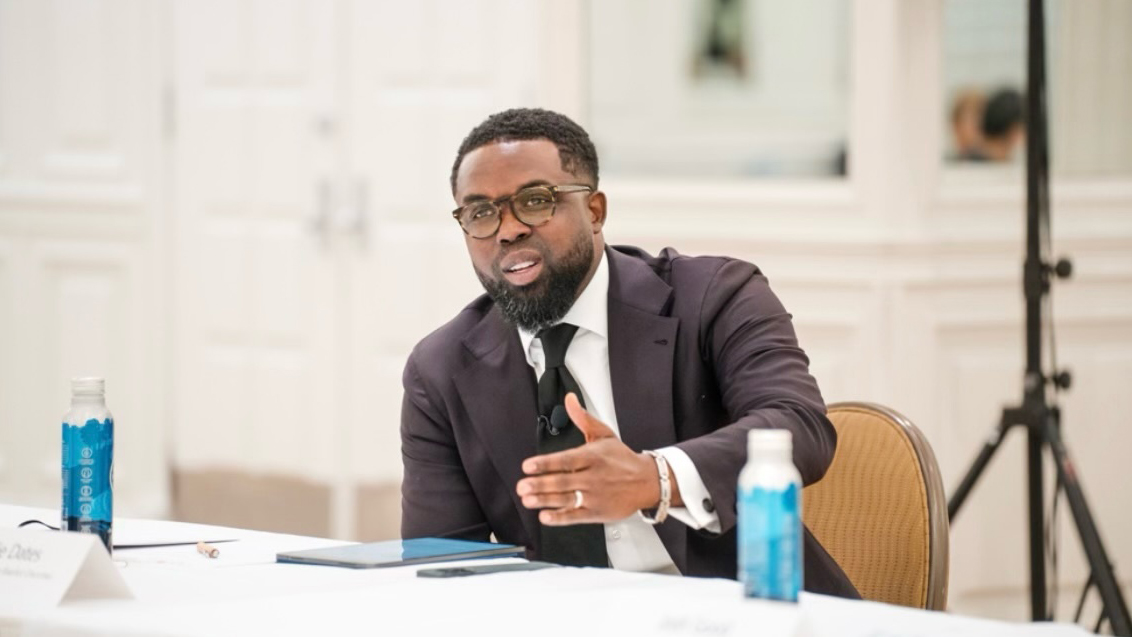
The Rev. Charlie Dates speaks at the Faith Angle Forum in Miami Beach, Florida, on Monday, March 18, 2024. (Photo by Denis Contreras)

The Rev. Charlie Dates speaks at the Faith Angle Forum in Miami Beach, Florida, on Monday, March 18, 2024. (Photo by Denis Contreras)

After learning of MacArthur’s recent comments, Dates, who also is pastor of Salem Baptist Church of Chicago, said in a sermon, part of which was posted on Instagram on Feb. 26: “I’m so angry I could cry.”

He noted in his open letter that MacArthur had chosen to make his remarks during Black History Month. And in a later post on Instagram, Dates said: “Pastor MacArthur, You won’t do this to Dr. King … and you won’t disrespect millions of Christians without account.”

In an interview on Monday (March 18), Dates said, “He cannot get away with this. He has to know that Black and Black-adjacent clergy around the country wholeheartedly disagree with him on theological grounds. He’s not the keeper of who’s Christian and who’s not.”

In the past, MacArthur sought to align himself with the ideals of the Civil Rights Movement.

Phil Johnson, the executive editor of Grace to You, MacArthur’s media ministry, said that the pastor is not giving interviews or taking any additional questions about King. But Johnson drew a distinction between King’s work on civil rights and his doctrinal beliefs or conduct.

“As John MacArthur mentioned in his recent comments, he believes much of Dr. King’s work in the realm of Civil Rights, voting rights, and equal treatment for all ethnicities was good and beneficial,” Johnson wrote in an email.

Johnson added that MacArthur has long been critical of King on a doctrinal level. King’s “doctrine and morals do not make him a model Bible-believing (person) Christians should seek to emulate,” Johnson said. “That should not really be controversial to anyone familiar with the record of his private life and beliefs.”

MacArthur’s comments echo similar comments by other conservative leaders dating back to the 1960s. During the Civil Rights era, Christianity Today ran a series of essays from then FBI director J. Edgar Hoover, who dismissed the work of King and other Black leaders as communist rather than Christian.

In the open letter, Dates invokes both Hoover and the segregationist Alabama Gov. George Wallace, calling MacArthur “them in postmodern dress.”

The letter closes with a statement of plans to boycott MacArthur’s work: “Perhaps we should tell you that we are calling on Christian Clergy of all colors to stop reading your commentaries, to dislodge themselves from your conferences, and to give your voice no amplification in their teaching until you fight for justice to roll down like a river in America and righteousness like a mighty stream for those who are marginalized.”


Biden administration finalizes rule on religious liberty protections

“Today’s announcement establishes uniform policies to safeguard Americans from religious discrimination in social services,’ said Health and Human Services Secretary Xavier Becerra.

(RNS) — Nine agencies of the Biden administration have finalized a new rule that officials say will improve religious freedom by protecting the rights of beneficiaries of social services funded by the government.

In particular, the rule will affect those receiving help from the many social service providers that are faith-based and will ensure providers cannot withhold help based on faith affiliation nor require beneficiaries to participate in any religious activity in order to receive help.

The rule restores some religious freedom protections that were rescinded by the Trump administration that also affected people seeking job search and job training assistance, housing services and academic enrichment. It also clarifies that faith-based organizations should be able to compete equally with secular providers for awards while keeping their religious character.

“Today’s announcement establishes uniform policies to safeguard Americans from religious discrimination in social services,” said U.S. Health and Human Services Secretary Xavier Becerra in a Friday (March 1) statement. “These regulations aim to guarantee broad access to essential social services for eligible individuals, reinforcing awareness of religious liberty protections.”

The 187-page rule, scheduled to be published in the Federal Register on Monday, was issued by the following departments: HHS, Agriculture, Education, Homeland Security, Housing and Urban Development, Justice, Labor, Veterans Affairs and the U.S. Agency for International Development.

One of the key protections is a requirement that organizations receiving federal grants for U.S. social service programs inform beneficiaries of their right to not be discriminated against on the basis of their religion. Grantees must provide a model notice to providers of this requirement, which applies to programs supported by grants or by vouchers.

Another key aspect of the rule is the encouragement of government agencies funding U.S. programs to aid beneficiaries in locating alternative providers in their region that are more compatible with their beliefs and also are federally funded.

RELATED: Biden signs executive order reestablishing White House faith office

The announcement was hailed by organizations that have long supported the separation of church and state and religious freedom.

“We applaud the Biden administration for restoring religious freedom protections for the millions of often vulnerable and marginalized people who use government-funded social services,” said Rachel Laser, president and CEO of Americans United for Separation of Church and State, in a statement.

“Religious freedom is a foundational American principle. No one should have to give up their religious freedom in order to have access to critical services. No one should ever be pressured to participate in religious activities or be required to meet a religious litmus test in exchange for the help they need.”

Interfaith Alliance said the new rule is an important step in restoration of rights of people who seek aid from social service providers that receive federal funds, including food banks, eldercare organizations and shelters aiding those who are coping with domestic violence or homelessness.

“This is an important course correction from the Trump administration’s attack on every person’s right to believe as they choose without coercion,” said the Rev. Paul Brandeis Raushenbush, Interfaith Alliance’s president and CEO, in a statement. “The federal government has an obligation to ensure all people can equitably access life-saving social services without sacrificing their religious freedom rights and without fear of discrimination.”

The rule responds to an executive order in February 2021 when President Joe Biden re-established the White House Office of Faith-based and Neighborhood Partnerships.

Stanley Carlson-Thies, founder of the Institutional Religious Freedom Alliance, also welcomed the development that has long involved staffers of that office and its cabinet-level counterparts.

“I’m glad to see the rights of beneficiaries not to participate in unwanted religion be well protected again,” he said in a statement to Religion News Service. “Government needs to do a better job on the positive side: accommodating beneficiaries who can best be helped when a religion shaped program is one of the options.”

In January 2021, Americans United joined other groups in suing on the day the Trump administration rule became effective, shortly before the end of his presidential term. The suit has been on hold while the Biden administration worked to finalize the new rule.

Melissa Rogers, who was appointed by Biden in 2021 to oversee the so-called faith-based office, as she had in former President Barack Obama’s second term, also had opposed the Trump administration’s plans to remove the requirement that faith-based social service providers offer a secular alternative to people seeking their assistance.

“You can’t benefit from protections you don’t know you have,” she tweeted in January 2020. “The religious liberty of social service beneficiaries is as important as the religious liberty of faith-based providers.”


Faith Leaders Renew Push for ‘Accurate’ Black History Education in Florida

(RNS) — Faith leaders in Florida and their supporters are redoubling efforts to ensure Black history is taught widely and truthfully in reaction to the state’s rejection of an Advanced Placement course on African American studies and changes to state academic standards about public school history instruction about slavery.

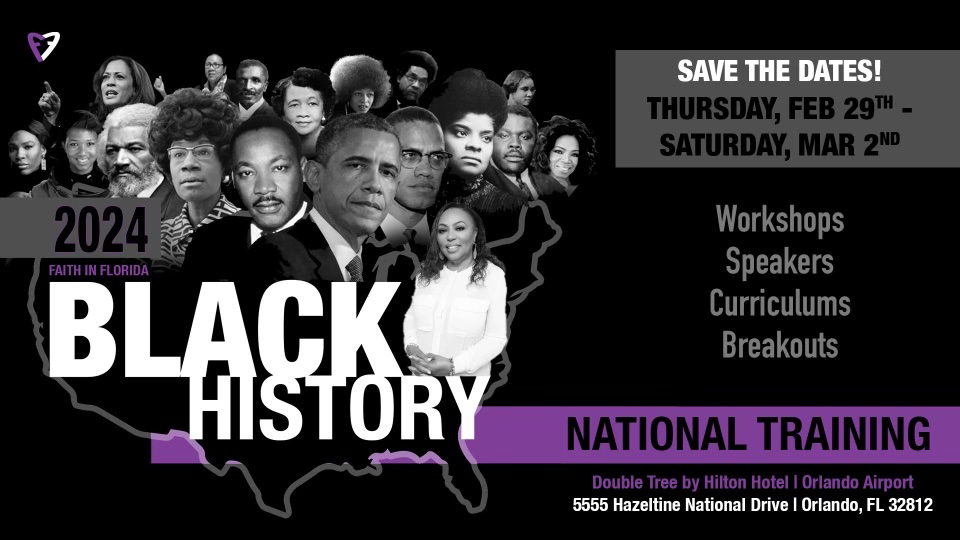
Starting Thursday (Feb. 29), leaders of Faith in Florida, who last year created an online toolkit for churches wanting to teach Black history, will meet in Orlando for a training session with Florida educators and others to share how they have used it.

In the same week, Black Baptist clergy, scholars and curriculum publishers organized by the Florida General Baptist Convention will meet at a church in Tallahassee for a symposium called “Teaching Our Own History.” The participants intend to review a curriculum outline they hope will be used in schools and churches across the state.

“Our march is not for a moment but it’s for a movement,” said the Rev. R.B. Holmes Jr., pastor of Tallahassee’s Bethel Missionary Baptist Church and host of the two-day symposium set to begin on Monday.

The developments come after state social studies authorities suggested that lessons about slavery in America could include “how slaves developed skills which, in some instances, could be applied for their personal benefit.”

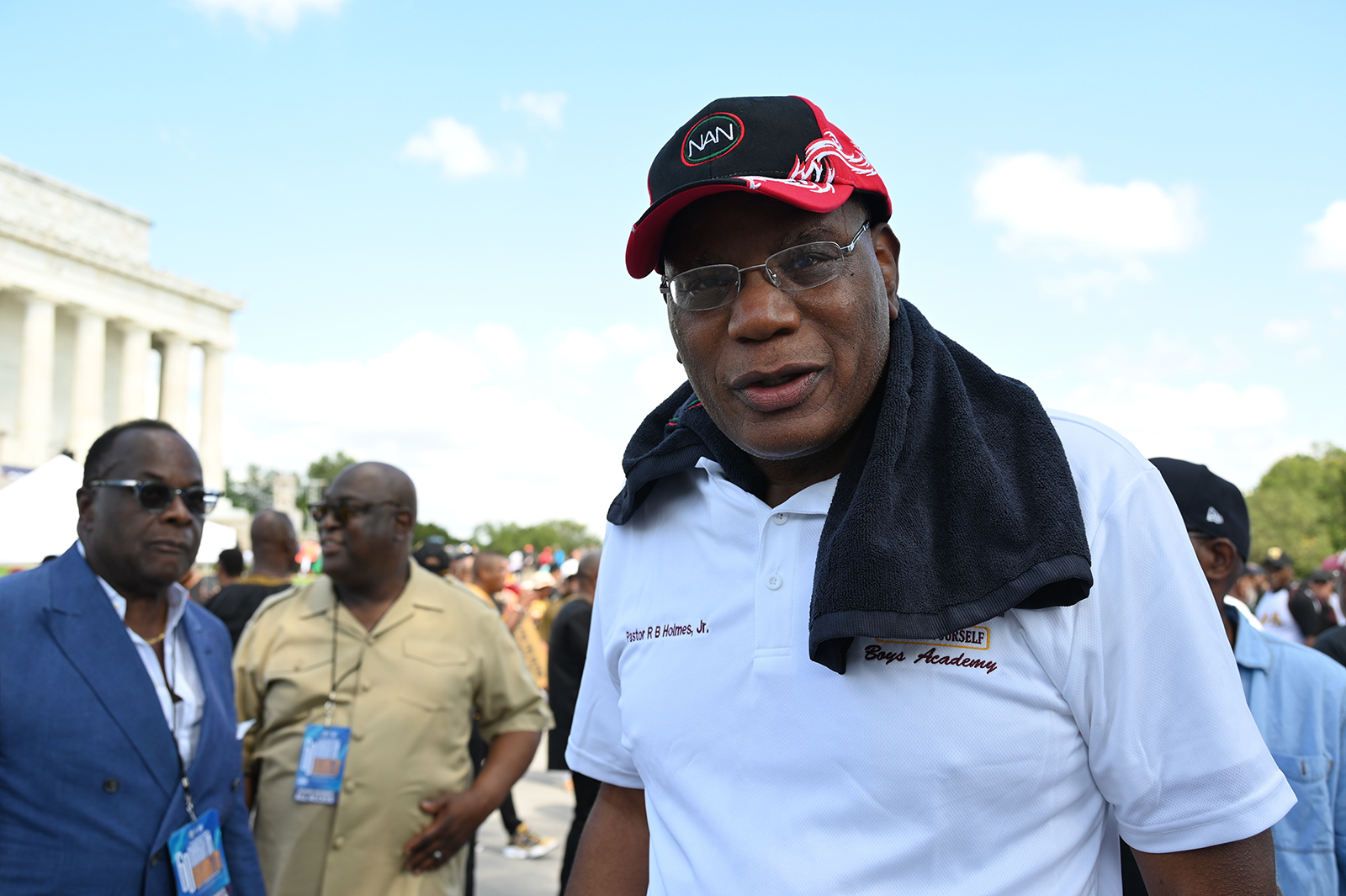
The Rev. R. B. Holmes Jr. attends the 60th anniversary of the March on Washington at the Lincoln Memorial in Washington, D.C., on Aug. 26, 2023. RNS photo by Jack Jenkins.

The Rev. R.B. Holmes Jr. attends the 60th anniversary of the March on Washington at the Lincoln Memorial in Washington, D.C., on Aug. 26, 2023. (RNS photo/Jack Jenkins)

Holmes said in an interview that Baptist leaders plan to present their model for teaching African and African American history as an alternative to the “hurtful” state curriculum and will share details of it with state government officials at the conclusion of the symposium.

“We will present to the governor of Florida, the Commissioner of Education and the Board of Education a factual, accurate and correct teaching of African American history in our public schools,” Holmes said in a statement. “An enslaved people didn’t derive any benefits from slavery; slavery was brutal, treacherous, sinful and unscrupulous.”

The Rev. Carl Johnson, president of the Florida General Baptist Convention, said the new curriculum guide will be available statewide starting in 2025 and he hopes other Baptist state conventions affiliated with the National Baptist Convention, USA, will follow its model.

“Our primary goal is to dispel any myth that’s not accurate about our history,” he said in an interview. “We’re crafting information to correct those misnomers.”

Leaders of the “Teaching Our Own History” task force said more than 50 churches and organizations have committed to using the curriculum guide at “freedom schools” organized to teach Black history, following a model created during the Civil Rights Movement of the 1950s and ’60s that provided academic enrichment and trained students about social change.

The 2023 Florida education statutes allow public school teachers to discuss “the development of slavery, the passage to America, the enslavement experience, abolition, and the history and contributions of Americans of the African diaspora to society.” But they say instruction “may not be used to indoctrinate or persuade students to a particular point of view inconsistent with … the state academic standards.”

Flyer for the Faith in Florida Black History training sessions. (Image courtesy Faith in Florida)

Flyer for the Faith in Florida Black History training sessions. (Image courtesy Faith in Florida)

Dana Thompson Dorsey, an associate professor of education law at the University of South Florida who chairs the Baptist leaders’ curriculum committee, said the outline includes Black inventors such as Garrett Morgan, who created the yellow caution light in the traffic signal, and Otis Boykin, who created a crucial component of the pacemaker.

“We’re trying to just make it easier and less stressful for teachers to teach information that they can include in every course that they teach even if they are not a history teacher,” Thompson Dorsey said.

“It may include inventors, or it may include different calculations or something that has been created by Black mathematicians,” she said.

The Rev. Frederick D. Haynes III, president of the Rainbow/PUSH Coalition, is scheduled to preach at a “Save Our History” revival during the evenings of the Tallahassee symposium.

The Rev. Frederick D. Haynes III. (Courtesy photo)

The Rev. Frederick D. Haynes III. (Courtesy photo)

“I’m so proud of my colleagues in the state of Florida who have decided to take this situation into their own hands and actually do something about it,” he said in an interview, adding that he hopes their work could be replicated by others across the country.

“There is a real concern that there are some in this nation who are determined to make us just blind to a rich history that is a part of American history. And it does us no good when we turn our backs on a rich history that really needs to be shared and told,” he said.

Faith in Florida, a consortium of Florida leaders, is working to advance Black history, particularly through churches. In May of 2023, the multiracial and multifaith coalition of congregations launched an online toolkit to encourage Florida churches to teach Black history.

As of October, leaders of more than 300 congregations — mostly pastors of Black churches — from 22 states had pledged to join in the cause. That number has grown to more than 400 congregations in Florida and 28 other states and includes leaders from predominantly white and Muslim communities.

“People across the state and across the country want to know: How do we do more? How do we escalate this teaching?” said the Rev. Rhonda Thomas, executive director of Faith in Florida.

“What’s so important for us, and this convening, is making sure that we continue to teach history in its richness, in its fullness, teach it in ways that even educators wouldn’t be able to teach, because we don’t have a restriction in the church,” she said.

Both of the training sessions — the first in Tallahassee and the second in Orlando — will include curriculum companies whose products could enhance Black history instruction, organizers said.

The Rev. Rhonda Thomas. (Photo courtesy Faith in Florida)

The Rev. Rhonda Thomas. (Photo courtesy Faith in Florida)

Thomas said Holmes and his team have her organization’s support. The Florida General Baptist Convention is a partner of Faith in Florida, and some of the churches involved in the Tallahassee symposium are active members of her organization.

“We definitely do not look at it as a competitive thing, but we see how it’s going to take all of us to work together as one to make sure that Black history is taught in its fullness, in a way that it’s not diluted,” she said.

Ahead of the upcoming meetings, Thomas said she has already noticed the difference the church-based focus on Black history has made in some of Florida’s congregations.

“We have seen across the state how teaching Black history has become its own identity,” she said, “and now some of our Black history classes are larger than our Sunday school classes.”


Bishop T.D. Jakes Continues Longtime Commitment to Maryland Revival in Wake of Rumors

UPPER MARLBORO, Md. (RNS) — On the stage of First Baptist Church of Glenarden International, Bishop T.D. Jakes didn’t spend much time preaching from the lectern at center stage of the megachurch.

Instead, the televangelist walked back and forth in his dark suit and striped tie, switching a handheld microphone from his left to his right hand, sometimes facing the predominantly Black congregation of thousands gathered for an annual revival at the start of the year, other times turned toward the clergy and the choir members sitting on the large stage.

“The Holy Spirit sent me all the way to the DMV to tell you this is your year to pivot,” the Dallas-based Pentecostal minister said to cheers and applause from the Washington, D.C.-area crowd, many on their feet on Jan. 5. “You have to surround yourself with people who can pivot because they’re following who you used to be. Now they’ve got to follow who you have become.”

As he expounded on the biblical story of Joshua succeeding Moses, it was not readily apparent that two weeks before, rumors of the kind that might have led to his own succession had gone viral on social media. While some of his many ministries and businesses issued statements in response, Jakes appeared to be treating the rumors as a bit of turbulence rather than lasting turmoil.

Bishop T.D. Jakes leads a revival on Jan. 5, 2024, at First Baptist Church of Glenarden International in Upper Marlboro, Maryland. (Photo by Lee Bonds, courtesy First Baptist Church of Glenarden)

The prosperity gospel preacher, entertainment executive and ministry entrepreneur has grown exponentially since his early days as a storefront pastor in West Virginia. Jakes moved to the Dallas area in 1996 and founded The Potter’s House, now a nondenominational megachurch with multiple locations and more than 30,000 members, according to the Dallas Morning News. In 2001, Time magazine featured the traveling evangelist on its cover, asking, “Is This Man The Next Billy Graham?” He now sits at the helm of numerous ministries and businesses and keeps the company of high-powered executives and A-list celebrities.

But those connections have spawned criticism and prompted salacious rumors.

In May, University of Pennsylvania religious studies chair Anthea Butler used her MSNBC column to question Jakes’ new 10-year partnership with Wells Fargo & Company that he has said aims to reduce food deserts and increase affordable housing in Atlanta and other cities.

“(I)n working with a financial institution that’s been repeatedly accused of racist lending practices, Jakes will likely be hurting a Black community he says he wants to help,” Butler wrote shortly after the partnership was announced. “Indeed, his partnership with Wells Fargo is tantamount to his working with the fox to raid the henhouse.”

Kelley Cornish, who became the CEO of the T.D. Jakes Foundation in April after serving as an executive overseeing DEI at Wells Fargo, said the foundation, a 501(c)(3) organization separate from Jakes’ church, is hoping to build 300 affordable homes as part of a new development with retail stores and schools at the former site of Fort McPherson in Atlanta in addition to helping bring a grocery store to an area outside the city that has none.

“I would say organizations that want to come together for good, let it happen,” she said in a Thursday (Jan. 11) interview with Religion News Service in response to Butler’s assessment. “The past is the past, but at some point, you have to figure out how do you course correct, and so our partnerships, a lot, are about course correction. And we’re excited about that. We have access to the community that they want to serve or serve better.”

Bishop T.D. Jakes is the senior pastor at The Potter’s House of Dallas. (Photo courtesy of The Potter’s House of Dallas)

More recently, unverified allegations of sexual misconduct at parties hosted by hip-hop mogul Sean “Diddy” Combs have put Jakes in headlines. In December, a TikTok and YouTube video alleged that Jakes engaged in gay sex at Combs’ parties. Separately, a talk-show host accused Jakes of improper behavior with a young male.

Bishop T.D. Jakes speaks during a revival on Jan. 5, 2024, at First Baptist Church of Glenarden International in Upper Marlboro, Maryland. (Photo by Lee Bonds, courtesy First Baptist Church of Glenarden)

Jakes, 66, was not available for an interview at the time of the early January revival but appeared to deny the claims during his Christmas Eve sermon.

“I will not use his sacred day and this sacred pulpit to address a lie when I have a chance to preach a truth,” he said. “I will stand straight up, head up, back straight, and preach the unadulterated, infallible word of God because that is what the pulpit is for. But there will be a time.”

His ministry responded more directly when asked for a statement.

“Recent claims circulating on pockets of social media about Bishop T.D. Jakes are unequivocally false and baseless, said Jordan A. Hora, executive director of PR & Communications for T.D. Jakes Group, T.D. Jakes Ministries and The Potter’s House in a statement.

“It’s disheartening to witness the proliferation of numerous deepfake photos and the distortion of words through false, sensationalized misrepresentations, encapsulating purported statements to falsely speculate and attack others, including Bishop Jakes. … Chairman Jakes, undeterred by false, perverse, ignorant and conspiratorial speculations, will persevere in his continued dedication to create meaningful change for millions around the globe guided by the timeless principles of compassion, service and ministry.”

Derrick Williams, executive vice president of T.D. Jakes Entertainment, added a statement related specifically to Jakes’ connections to Combs, who chaired REVOLT Media & TV, a Black-owned media company that announced in 2021 it would feature a sermon series hosted by Jakes.

“As a filmmaker, executive producer and one of the pioneers of value-based movies, Bishop Jakes, in his role as CEO of T.D. Jakes Entertainment, paid respect to the former Chairman of Revolt during the celebration of his birthday,” Williams stated. “We both greeted the family. Bishop Jakes recorded a brief celebratory birthday video and left immediately to take our other scheduled meetings. Any accusation to the contrary is wholly unsubstantiated, unverified and false.”

While some of the companies Jakes leads or works with, including his foundation, did not respond to requests for comment about the rumors, a number of his collaborators were quick to express their support for him.

“Bishop Jakes is too smart to do something that these people are accusing him of,” said Pastor John K. Jenkins Sr. of First Baptist Glenarden, who co-hosted the January revival with leaders of D.C.’s Greater Mount Calvary Holy Church. “I don’t subscribe to just embracing accusations like that.”

Values Partnerships CEO Joshua DuBois, who most recently worked with Jakes on mental health campaigns for Black men, Hispanic men and faith leaders, described Jakes as a leader focused on eternal truths, “not sort of short-term, cultural conversations and innuendo,” in a January interview with RNS.

Pray.com CEO Steve Gatena, who in November launched a “Sleep Psalms” prayer and meditation podcast featuring Jakes’ deep voice at the beginning of episodes, told RNS that working with Jakes has been an “incredible experience” and that the two hope to continue the partnership. “We love making a difference in the lives of millions of people together,” Gatena said in a statement.

Just as with the Christmas Eve congregation, Jakes told the revival audience early in his time on stage that he could sense their care for him.

“I love you back,” he said, as people filling the 4,000-seat suburban Maryland sanctuary welcomed him back to the revival where he had been a guest speaker for more than 30 years. “I feel your love. I feel your prayers. I’m thankful to God for them.”

The Rev. Cheryl Townsend Gilkes, professor emerita of African American studies and sociology at Colby College, said she was “not surprised at all” to hear how the revival’s congregation welcomed and responded to Jakes so soon after the rumors appeared. She describes Jakes as a Black leader who has long represented “the unusual combination of giftedness in preaching and giftedness in administration.”

Bishop T.D. Jakes delivered a sermon in Sept. 2005 for then-President Bush, then-Vice President Cheney and attendees of the National Day of Prayer and Remembrance after Hurricane Katrina. (Photo via T.D. Jakes Ministries Facebook)

She expects his preaching — which has occurred at national gatherings, including the annual conference of Black ministers at Hampton University, and occasions of national crisis, such as his Washington National Cathedral sermon after Hurricane Katrina — will continue “as long as the Lord keeps him healthy.”

Jakes in 2017 told RNS just before his 60th birthday: “I doubt seriously that retirement any time soon is in my purview.”

He casually mentioned his plans to keep on preaching as he ended his more than 100 minutes on the revival’s stage and urged his congregation for the evening to reject naysayers and focus on what they believe God has envisioned for them.

“If you would do this for the next 365 days,” he predicted, “when I come back next year you will be a completely different person.”

Yolanda Thomas, who has attended the revival for several years, said she had no hesitation about attending this year after allegations surfaced about Jakes.

“To me the work that he’s done, along with his character, has superseded the allegations,” said Thomas, 49, of Bethesda, Maryland.

“I recognize he’s a messenger,” she added. “He’s not God himself.”


Dozens of Black Churches Receive Total of $4 Million for Historic Preservation

Thirty-one Black churches have received a total of $4 million to help preserve their buildings and the Black history they represent.

The National Trust for Historic Preservation announced the second round of Preserving Black Churches grants from its African American Cultural Heritage Action Fund on Monday (Jan. 15), the national holiday honoring the Rev. Martin Luther King Jr. Along with the funds provided last year, the Action Fund has supported more than 70 historic churches with $8.7 million in grants.

“We created the Preserving Black Churches program to ensure the historic Black church’s legacy is told and secured,” said Brent Leggs, executive director of the fund, in a statement, adding that “these cultural assets can continue to foster community resilience and drive meaningful change in our society.”

Clockwise from top left: Shiloh Baptist Church in Cleveland, Ohio. (Photo by Rev. Dr. Lisa Goods); St. Augustine Catholic Church in New Orleans, Louisiana. (Photo by Father Emmanuel Mulenga); Ward Chapel AME Church in Cairo, Illinois. (Photo by E. Charles Photography); Taveau Church in Cordesville, South Carolina. (Photo by Bill Fitzpatrick/ Preservation South Carolina)

This year’s grants, which range from $50,000 to $200,000, will allow congregations to address issues such as mold contamination, demolition, water filtration and deferred maintenance.

Among the recipients this year is Town Clock Church in New Albany, Indiana, which was constructed in 1852 and then named Second Presbyterian Church. It was a station on the Underground Railroad, providing shelter to enslaved people who were fugitives. Funds earmarked for endowment and financial sustainability will be used to maintain 2014 preservation and restoration efforts.

Others include African Methodist Episcopal churches that received capital project grants. For example, Atlanta’s Big Bethel AME Church was the birthplace of Morris Brown College, the first educational institution in Georgia owned completely by African Americans. New Orleans’ St. James AME Church was a gathering site for marchers of the Civil Rights Movement and the headquarters of the Louisiana Native Guards, Black Union soldiers who fought in the Civil War.

Historian Henry Louis Gates Jr., an adviser to the fund, which is supported by Lilly Endowment Inc., welcomed the decisions on the new grant recipients, some of which currently have facilities that are closed due to structural damage.

“The heart of our spiritual world is the Black church,” said Gates in the announcement. “These places of worship, these sacred cultural centers, must exist for future generations to understand who we were as a people.”

The other recipients are:

Receiving planning grants:

St. Luke’s Episcopal Church, Fort Valley, Georgia

Mount Carmel Missionary Baptist Church, Milwaukee, Wisconsin

Moore’s Chapel African Methodist Episcopal Zion Church, Morrilton, Arkansas

Calvin Memorial Presbyterian Church, Omaha, Nebraska

St. Peter’s United Methodist Church, Oxford, North Carolina

Henderson Chapel AME Zion Church, Rutledge, Tennessee

Ward Chapel AME Church, Cairo, Illinois

Taveau Church, Cordesville, South Carolina

Receiving programming and interpretation grants:

Mt. Zion AME Church, Skillman, New Jersey

Guidance Church of Religious Science, Los Angeles, California

Gather Place (the former African Methodist Episcopal Church of Yardley) in Yardley, Pennsylvania

Receiving organizational capacity grant:

The House of God Church, Nashville, Tennessee

Receiving capital projects grants:

Shiloh Baptist Church, Cleveland, Ohio

Union Bethel AME Church, Great Falls, Montana

First Zion Baptist Church, Harpers Ferry, West Virginia

Antioch Missionary Baptist Church, Houston, Texas

Central United Methodist Church, Jackson, Mississippi

Washington Chapel Christian Methodist Episcopal Church, Parkville, Missouri

Beulah Missionary Baptist Church, Natchez, Mississippi

Jacob’s Chapel AME Church, Mount Laurel, New Jersey

St. Augustine Catholic Church, New Orleans, Louisiana

St. Paul AME Church, Lexington, Kentucky

Thomas Memorial AME Zion Church, Keeseville, New York

Mother Bethel AME Church, Philadelphia, Pennsylvania

Tabernacle Baptist Church, Selma, Alabama

First Missionary Baptist Church, Thomasville, Georgia

Campbell AME Church, Washington, D.C.

St. Paul Methodist Episcopal Church, Augusta, Kentucky

Religion News Service receives funding from Lilly Endowment through the Religion News Foundation.

This story has been updated.


Pandemic Boosted Resilience, Hurt Financial Health of Black Churches, Says Report

(Religion News Service)

Black majority congregations, known for their high levels of community outreach during the COVID-19 pandemic, have remained the most stable in combined attendance — in person and online — compared with multiracial and white majority congregations. But they are also facing the greatest monetary struggles, with 34% reporting their financial health is worse in 2023 than in 2018, compared with 29% of majority white congregations and 28% of multiracial congregations. A new report highlights the challenges faced by Black and multiracial congregations, as well as their resilience, in the wake of a pandemic that prompted significant changes in worship and community service.

“As far as opening up as vaccine sites, to actually put in place mitigation measures — so whether that’s shutting down, encouraging masks — majority Black congregations and multiracial congregations led those efforts,” said B. Clarvon Watts, author of “Understanding the Pandemic Impact on Black and Multiracial Congregations.”

“Financial Health Comparison 2018 v 2023” (Graphic courtesy of HIRR)

Watts is a sociologist and postdoctoral research fellow at the Hartford Institute for Religion Research, which released the report on Thursday (Jan. 4). Black congregations — affiliated with mainline, evangelical and historically Black denominations — often were significantly more involved in some responses to COVID-19.

Nearly all those surveyed — 99% — encouraged vaccinations, compared with 53% of majority white congregations and 49% of multiracial congregations, defined in the report as those where no one racial group comprises more than 80% of the congregation.

Watts said many congregations featuring nonwhites embraced hybrid services as they adapted to the pandemic. While majority white congregations were the most likely to offer a virtual worship opportunity at least once a week (82%), Black majority congregations were the most likely to offer multiple online worship opportunities throughout the week (27%), compared with 23% of multiracial congregations and 15% of white majority congregations.

The community involvement during the pandemic was an extension of the “octopus legs” of Black churches, explained Watts. Historically, these congregations often operated as hubs for providing education, legal and health opportunities for African Americans, who were often unable to access those resources elsewhere due to discrimination and segregation.


B. Clarvon Watts. (Submitted photo)

“You’re trying to meet multiple, multiple needs,” she said of the pandemic-influenced hybridity, “trying to provide in person and virtual worship, virtual programming, whether that’s education or it’s gathering to pray or gathering to do Communion.”

Likewise, multiracial congregations often sought to use the hybrid model for the range of families in their congregations, from working parents to immunocompromised congregants, she said.

Congregations reported a decrease in their local community activities from before the pandemic to 2023. While majority white congregations said their rate of involvement remained constant, the percentage of majority Black and multiracial congregations agreeing or strongly agreeing that they were civically engaged decreased 21% and 12% respectively.

Congregations of all racial groups saw a significant decline of volunteers by the summer of 2021. Black congregations, by 2023, reported a return to the pre-pandemic level of about 30% of their congregation serving as regular volunteers. However, multiracial and majority white congregations, whose volunteers were near 40% before the pandemic, reported just 35% in 2023.

The report, which contrasted congregational life today with that pre-pandemic, also looked at clergy well-being over a two-year period.

Watts, who also runs a Black church’s nonprofit in Connecticut, said the pandemic exacerbated the already extensive roles of clergy who marry, counsel and bury congregants.

“I think it’s too big for any one person or any one institution,” she said, suggesting the need for greater partnerships in congregations and the community to support clergy.

In fact, the report notes that clergy across the board, regardless of their congregation’s racial makeup, were more likely to have thoughts about exiting their congregations in 2023 than in 2021.

“The decreased well-being among clergy and increased consideration of leaving ministry or one’s faith community is a shared burden among all clergy, yet slightly less dire for Black Christian congregational leaders,” Watts stated in the report. “Black clergy’s commitment to their call and subsequent congregations’ resilience throughout the pandemic has been and continues to be unwavering.”

The findings are based on data from the Faith Communities Today and the Exploring the Pandemic Impact on Congregations study. Sample sizes for Black majority congregations range from 140 in an EPIC study to 774 in a FACT study; for multiracial congregations, from 841 in EPIC to 2,623 in FACT; for white majority congregations, 2,802 in EPIC to 10,073 in FACT.

The estimate for the margin of error is plus or minus 4 percentage points.


Charlottesville’s Robert E. Lee Statue Melted Down

By Jack Jenkins and Adelle Banks

(RNS) — Community leaders in Charlottesville, Virginia, have melted down a statue of Confederate Gen. Robert E. Lee, the removal of which spurred violent protests in 2017 that resulted in the killing of a counterprotester by a white supremacist.

Among the leaders of the project, known as the Swords Into Plowshares initiative, is Jalane Schmidt, a religious studies professor at the University of Virginia, where throngs of protesters marched with torches the night before the August 2017 Unite the Right rally.

On Thursday (Oct. 26), Schmidt, who is also director of the Memory Project at UVA’s Karsh Institute of Democracy, an effort launched in the aftermath of the Charlottesville violence, opened a news conference by reciting Scripture that calls on believers to beat swords into plowshares.

Molten bronze produced by melting Charlottesville’s monument of Robert E. Lee is poured from a hot crucible into ingot molds, Oct. 21, 2023. Photo © Eze Amos

“We’re here to announce that we’ve melted the Lee statue,” Schmidt said, to applause. She later added: “Creativity and art can express democratic, inclusive values. We believe that art has the potential to heal.”

Organizers said they plan to hire an artist to use the bronze from the statue to form a new art piece, although details have yet to be worked out.

The announcement is the coda in a yearslong legal battle over the statue. After the white supremacist rally ravaged the city, local elected officials voted unanimously to donate the statue in late 2021 to the Jefferson School African American Heritage Center, a local Black-led nonprofit that funds the Swords Into Plowshares initiative. Shortly thereafter, two groups — Trevilian Station Battlefield Foundation, which oversees a Civil War battlefield elsewhere in Virginia, and the Ratcliffe Foundation, which manages a museum in Russell County with ties to a Confederate general — filed suit in an attempt to halt efforts to melt the monument down.

But the groups, both of which had submitted unsuccessful bids for the statue, ultimately failed in court. A judge removed the Ratcliffe Foundation from the case in May and dismissed most of Trevilian Station Battlefield Foundation’s case in July. Trevilian Station effectively ended its legal efforts later that month.

Andrea Douglas, executive director of the Jefferson School African American Heritage Center, said during the news conference that project leaders are just beginning the process of selecting a jury to help decide which artist or group will create the replacement artwork. They hope to gather sculpture specialists, historians and “people who understand our narrative deeply,” she said.

The destruction of the statue, which was removed from a city park in July 2021, actually began over the weekend: The head was melted down in an undisclosed location, as was the sword.

The Rev. Isaac Collins speaks at a foundry about the biblical meaning of “swords into plowshares” while a worker prepares to melt Charlottesville’s bronze monument of Robert E. Lee in a furnace, Oct. 21, 2023. Photo © Eze Amos

The Rev. Isaac Collins, a United Methodist minister in Charlottesville, was part of a small group allowed to witness the melting of the statue. He told Religion News Service he spoke to the assembly shortly before the process began and quoted Psalm 135:15-18, which states “the idols of the nations are silver and gold, the work of human hands. … They have mouths, but they do not speak. … Those who make them, and all who trust them, shall become like them.”

Collins said he had used the Scripture passage before in a 2019 public Bible study in Charlottesville that focused on racism because it helped “define the role that these statues played as idols for white supremacy.” He also reflected on events surrounding the erection of the statue in 1924, when the Klu Klux Klan staged cross burnings in the city and organized a march through a predominantly Black neighborhood.

“All of these things were connected in creating a culture of death that the Lee statue symbolized,” he said. Melting it down, he explained, was a literal enactment of Isaiah 2:2-4 — turning “swords into plowshares.”

“It’s taking that culture of death and repurposing it for the sake of life, telling this very long story of resistance to that white supremacist culture, and giving us a vision of how to move forward,” Collins said.

Schmidt, who also attended the melting, described the event as a somber affair, saying, “It was not celebratory.” Asked how she approached the moment as a religious studies scholar, she recalled the history of iconoclasm and the seriousness of dismantling objects imbued with meaning by others, be they secular or religious. That includes Confederate statues: When some monuments were erected in the early 20th century, she said, clergy participated in the proceedings.

Fast-forward roughly a century, and Charlottesville’s monument to the Confederate general has consistently proved to be a magnet for hate. Even after the Unite the Right rally, Schmidt noted, people showed up to “protect” the statue, patrolling the park where it stood.

A foundry worker places the sword from Charlottesville’s bronze monument of Robert E. Lee into a heated furnace to melt it, Oct. 21, 2023. Photo © Eze Amos

“The most meaningful part, for me, was when the sword went into the furnace,” she said.

At one point, Collins said, artisans sliced the head of the Lee statue into strips with blowtorches, then aligned them facing outward toward observers along the edge of the crucible. The face of Lee changed colors as the flames super-heated the metal, turning the surface’s green patina into an ashen gray. As they finished, workers struck the pieces with a hammer.

“It broke apart so easily,” Collins said.

As workers began pouring the molten metal into ingots, Collins said, artisans noted the presence of multiple colors, explaining the spectrum of pigment was evidence of unexpected impurities in the bronze.

“Our response at the time was, ‘Yeah, they’re impurities! A deep wickedness, a lot of suffering and pain,’” Collins said.

Religious leaders were among those who directly confronted the protesters who descended on Charlottesville in 2017 to participate in the Unite the Right rally.

The infamous torchlight march — which featured neo-Confederates and neo-Nazis shouting racist and antisemitic slogans such as “Jews will not replace us!” — took place on the UVA campus across the street from an interfaith worship service. The following day, a multifaith coalition of clergy and other faith leaders attempted to block the entrance to Emancipation Park, where the far-right rally was slated to take place. Protesters eventually shoved clergy out of the way, taunting the faith leaders throughout the day.

That afternoon, when a white nationalist barreled his car through a column of counterprotesters, killing one and injuring many others, clergy rushed to the scene to offer what support they could.

Since then, Confederate-related symbols have been removed from public places across the country, including from sacred spaces, with church leaders voicing concerns about racial injustice.

In September, the Washington National Cathedral unveiled its new stained-glass windows that replaced earlier panes honoring Lee and Confederate Gen. Stonewall Jackson. The new additions, titled “Now and Forever” and designed by artist Kerry James Marshall, depict Black protesters carrying signs that say “No Foul Play” and Fairness.”

The Washington National Cathedral unveiled four newly created and installed stained glass windows on Sept. 23, 2023. The previous windows were removed in part due to controversy over the Confederate figures that were featured in the images. Photo courtesy of Washington National Cathedral

Cathedral officials started considering replacing the windows after the 2015 slaying of nine people at Mother Emanuel African Methodist Episcopal Church in Charleston, South Carolina, by a white supremacist who was seen in photos brandishing the Confederate flag. The old windows were ultimately removed in the wake of the Unite the Right rally in Charlottesville.

In 2021, the Cathedral of the Rockies in Boise, Idaho, replaced a stained-glass window honoring Lee with an image of Bishop Leontine T.C. Kelly, the first African American woman bishop elected in the United Methodist Church. The decision about creating a new window was made around the fifth anniversary of the Mother Emanuel massacre. Church leaders said their plans were solidified further after the 2020 killings of George Floyd, Ahmaud Arbery and Breonna Taylor sparked Black Lives Matter protests.

As for the Charlottesville statue, Schmidt said the melting was simply the first step in a process she expects could take several years.

“We have a lot of work to do,” she said. “This is the end of the beginning.”